Having finished my second novel, THE HOLLOW QUEEN, and having let a few months pass, I've now started the excruciating process of revising it. I have to go through and do this at least once before I'll let my critique partners read it. When they're done critiquing, I'll go through it again. And again. And maybe one more time before I let them read it a second time. And then I'll revise some more. And maybe more after that.
The first draft, of course, is terrible. Awful. I hate it. HATE it. I wrote it as quickly as I could and paid little mind to good grammar, active voice, and sentence structure. I also wrote it for the purpose of getting the story out, not necessarily telling the story well.
Since this is only my second novel, revising is still a major process for me. However, there are a few things I learned from my first novel, which I am putting into practice this time around to make life a little easier on myself:
1. Don't let anyone read the first draft. ANY. ONE. I already have a page full of notes I made as I was writing the first draft, of things I need to change. There is a huge continuity error in the middle. Names change halfway through. Characters' entire religions and ethnicities change, and I have to fix all so it at least makes some kind of sense to human beings.
2. Don't let anyone other than my three critique partners read the second, third, or fourth drafts. Too many cooks, and all that. By the time I let my loved ones read my work now -- even short stories -- I'm pretty much at the point where the piece is ready, or very nearly ready, for submission. This way they get to experience the work the way I want other readers to experience it.
3. Make notes. Lots, and lots of notes. Like I said, I have a page full of them: things I wanted to remember to add earlier on in the story, names that have to be changed, points I need to look up and clarify.
4. Use this resource to identify overused words, and change them.
5. Do a search for the following, and change them: "-ly," "that," "seemed," "tried," "began," "felt," "knew," "it," "was."
6. Comb each chapter for character motivations. Since this novel is multiple POV, make sure each character has a distinctive voice.
Only when all of this is done, will I feel comfortable sending a draft to my crit partners. Even then, I know the manuscript will not be the best it can be...yet. I'll get their notes back. Some I'll agree with, and make changes. Others I'll disagree with and leave alone. I'll revise yet again, and probably think of a few new things to add or remove from the ms. Then I'll send out a draft again. And then I'll keep revising until I feel like the only real "changes" left are small, insignificant ones. That's when I know it's ready: ready to query to agents, ready to pitch on Twitter contests. Ready to be read by my husband and other loves ones.
But that journey is still a thousand miles from where I am right now. I'll get there, and hopefully this time around I'll get there quicker than the three years it took me with my first novel. Until then, I try not to beat myself up too much, and just focus.
Showing posts with label working. Show all posts
Showing posts with label working. Show all posts
Thursday, September 25, 2014

Wednesday, August 6, 2014
Post-Vacay Check-In
Last week the whole family went for a much-needed vacation to my parents' house in Miami. During that week, the husband and I drove up to Club Med in Sandpiper Bay, Port St. Lucie for four days and three nights of child-free time to ourselves, which we badly needed. I've posted some photos below to make you jealous. ;-)
Now that I'm back to Real Life, I'm ready to return to my 2014 reading project and to my writing. I've got my second novel to revise, two short stories to send out, and two works by my critique partners I have to edit; not to mention some more blog posts. Next week I have an interview with "Girl Out of Water" author Winnifred Burton, and in the next few weeks I'll have more sf/f influences, more book reviews, more Lost Scenes, and more Geek TV. Keep checking in!
Until then, enjoy the photos from Club Med: Sandpiper Bay!
 |
| Sunset over the St. Lucie River |


 |
| Morning in Sandpiper Bay, Port St. Lucie, Florida |
 |
| Our view at breakfast |
 |
| Club Med has six Hobie Cat sailboats. Hubby and I had an awesome time going for morning sails on the Port St. Lucie River. One morning we went so far out we saw dolphins! |
 |
| Hobie sail |
 |
| Enjoying a well-earned mimosa after driving the Hobie Cat along the river |
 |
| One afternoon it rained, so we drank rose wine at the lounge. Of course. |
Wednesday, July 16, 2014
WIP Wednesday
A fellow author I follow, Tami Veldura, started holding herself accountable for her writing progress by posting a "WIP Wednesday." In that spirit, here is an update on my writing projects:
BLOODSISTERS
I have slowed down the query process on BLOODSISTERS, for various reasons. It's not in a drawer yet, but I will probably not send out any new queries at this point.
THE HEALER
Out for submission to an anthology.
KNIGHTLY TALES FOR A RAINY DAY
Out for submission to a contest.
ATHEISTS IN THE CEMETERY
Out for submission to a contest.
THE STONE AGE GAP
Out for submission to a pro market.
THEN AND NOW
Searching for a submission market.
THANK YOU FOR YOUR SERVICE
Searching for a submission market.
THE HOLLOW QUEEN
My biggest work to date is now at 107K words. My original goal was 120K, which -- using the Stephen King-approved method of paring down 10% of your wc in revisions -- I intended to revise to between 105 and 110K before querying it next year. That goal, unfortunately, had to be adjusted to 110K, with a revised draft goal of between 95 and 100K.
The reason for this was pacing. For most of the novel, I feel the pacing is fine. I have good lead-ups, plenty of foreshadowing, and lots of character and setting development. After I hit the 100K mark, though, I felt the action needed to be sped up -- but I ran out of smaller plot points that would lead up to my big, climactic finale. At some point while writing yesterday I realized I was stalling. I had to get to the point. My characters were where they needed to be; what needed to be revealed had been revealed; all that was left was the big showdown. And so, rather than keeping myself chained to a word count that no longer felt realistic, I cut it down to 110K, and with that, I should have a complete first draft by the end of tomorrow.
I'll take a one week break before jumping right into revisions: I've already made notes as I've gone along so I know the major changes I need to do, and I've promised my critique partners they'll have a draft by Labor Day. My goal is to have a query-worthy draft by spring 2015.
How about you? How are your writing projects coming along?
Wednesday, June 4, 2014
How I Became a Plotter
In his book, "On Writing," Stephen King poo-poos the idea of writers creating and using outlines before writing their novels. He considers it anathema to the creative process, stifling the natural unfolding of the story in the writer's mind.
Which is great if that works for you.
I used to be that way, too. I thought outlines and any kind of prep work other than historical research meant my story wouldn't flow right out of me, like a river of poetry onto the page.
The result was twelve years to write my first novel, including a nearly five-year period in which I wrote nothing at all.
From 2001 to 2006 I worked as a data processor for a major auction house. This meant I spent eight hours a day sitting in front of a computer typing. The last thing I wanted to do in my spare time was...sit in front of a computer and type. Well-meaning individuals suggested I dictate my novel to a tape recorder (back when those were still things) or write long-hand. The problem with the latter was that I am a slow hand-writer, and, at over 75 words per minute, my typing skills are only just fast enough to keep up with my brain. The problem with the former was that I had no idea what I was going to say until it came out of me.
In both cases, an outline with a well-thought-out plot and fully-fleshed characters would have helped me. Since I didn't already know each major story point, I couldn't possibly tell the story out loud to a machine, or write it by hand. At least when I type into a word processor I can go back and delete entire chunks at a time. Or, as was the case with BLOODSISTERS, go back and start over from scratch.
When I finally did write BLOODSISTERS after my first child was born, it was, again, without an outline. I just let the story flow, feeling very writerly and creative about it.
When even my good friends read it and responded with, "Um...OK..." I knew it was bad.
I had to become a plotter. If I wanted to take myself seriously as a writer, if I wanted to get my stories under control and make them readable, I had to learn to outline. It took several tries and several methods, but I managed to do it. The resulting version of BLOODSISTERS is something I'm actually quite proud of, even if it never sees the publishing light of day.
And, because I learned the hard way with BLOODSISTERS, I knew how to avoid the same mistakes with my current work in progress, THE HOLLOW QUEEN. I outlined first and keep making notes as I go along. This time around, rather than scrapping the entire first draft and starting from page 1, again, when I get to revisions, the process will go a lot smoother (I hope).
Are you a plotter or a "pantser" (fly-by-the-seat-of-your-pants)? If you plot, how much do you do? How do you know when to stop plotting and start writing?
Wednesday, April 9, 2014
Writing Projects: Update
Just for fun, as a sort of check-in to keep myself on track, here's a rundown of all my current WIPs:
*Atheists in the Cemetery: My short ghost story for Fiction Desk's Ghost Story Competition has been returned by 2/3 of my crit partners. Feedback is positive, though there is still plenty of work to do. This was a tough one to write, which is weird: one of the first writing contests I ever won was with a ghost story for the Miami Herald when I was in 8th grade. My living room has a view of the nearby cemetery, which helped inspire the story. So...what gives? Maybe I went into this one with too much hubris. I figured it would just flow easily from my fingertips. The story itself is fine, it's just not very creepy -- a characteristic I believe ghost stories need for success. Will continue to inject as much creep factor into this one as I can before the May 30 submission deadline.
*The Stone Age Gap: I wrote this on a whim, inspired by my older son's love of robots and my fear of half-robot cyborg grandchildren one day. Once again, early feedback is positive, though it seems not reading a lot of science fiction is coming back to bite me in the ass. Not only is the theme of my story (sort of "Rise of the Machines" meets "Stepford Wives") been done to death, there's an actual name for it: near-future neo-Luddite. I like that, it makes me sound prophetic. I guess all those episodes of the Twilight Zone have rubbed off on me. (Rod Serling, writer of The Twilight Zone, was famously anti-technological takeover.) All I can do now for this story is hope that my take on the "near-future neo-Luddite" sub-sub-genre is creative and interesting enough to get published somewhere. Rod Serling, here I come!

*The Hollow Queen: I'm 46K words in, or at about 38% of my target word count goal of 120K. The reason for such a high word count goal is because I plan to pare it down in revisions to 100-105K. At this point the story is exactly where I need it to be, the action is coming along, and the characters are behaving themselves. If I can average 1K per day from now on - accepting that I'll have to do 2-3K on Tuesdays and Thursdays when the little one is at daycare, to make up for days when I can't write at all - I can have a complete first draft by the end of June, and a revised draft to send to my crit partners by Labor Day. Then, hopefully by next spring I'll have a query-worth draft to start pitching to agents.
*Wanderlust: Continues to collect metaphorical dust in the metaphorical drawer of my laptop's hard drive. I'm 55K in to a projected 100K first draft, so that's not nothing. But, it's had to take a rest while I bang out The Hollow Queen. Once THQ is out to my crit partners I'll revisit Wanderlust.
So there you go. Now I've said it, I've thrown it out there into the ether, now I *have* to finish those short stories and complete a first draft of THQ by June 30. Challenge accepted!
How are everyone else's projects coming along?
*Atheists in the Cemetery: My short ghost story for Fiction Desk's Ghost Story Competition has been returned by 2/3 of my crit partners. Feedback is positive, though there is still plenty of work to do. This was a tough one to write, which is weird: one of the first writing contests I ever won was with a ghost story for the Miami Herald when I was in 8th grade. My living room has a view of the nearby cemetery, which helped inspire the story. So...what gives? Maybe I went into this one with too much hubris. I figured it would just flow easily from my fingertips. The story itself is fine, it's just not very creepy -- a characteristic I believe ghost stories need for success. Will continue to inject as much creep factor into this one as I can before the May 30 submission deadline.
*The Stone Age Gap: I wrote this on a whim, inspired by my older son's love of robots and my fear of half-robot cyborg grandchildren one day. Once again, early feedback is positive, though it seems not reading a lot of science fiction is coming back to bite me in the ass. Not only is the theme of my story (sort of "Rise of the Machines" meets "Stepford Wives") been done to death, there's an actual name for it: near-future neo-Luddite. I like that, it makes me sound prophetic. I guess all those episodes of the Twilight Zone have rubbed off on me. (Rod Serling, writer of The Twilight Zone, was famously anti-technological takeover.) All I can do now for this story is hope that my take on the "near-future neo-Luddite" sub-sub-genre is creative and interesting enough to get published somewhere. Rod Serling, here I come!
*The Hollow Queen: I'm 46K words in, or at about 38% of my target word count goal of 120K. The reason for such a high word count goal is because I plan to pare it down in revisions to 100-105K. At this point the story is exactly where I need it to be, the action is coming along, and the characters are behaving themselves. If I can average 1K per day from now on - accepting that I'll have to do 2-3K on Tuesdays and Thursdays when the little one is at daycare, to make up for days when I can't write at all - I can have a complete first draft by the end of June, and a revised draft to send to my crit partners by Labor Day. Then, hopefully by next spring I'll have a query-worth draft to start pitching to agents.
*Wanderlust: Continues to collect metaphorical dust in the metaphorical drawer of my laptop's hard drive. I'm 55K in to a projected 100K first draft, so that's not nothing. But, it's had to take a rest while I bang out The Hollow Queen. Once THQ is out to my crit partners I'll revisit Wanderlust.
So there you go. Now I've said it, I've thrown it out there into the ether, now I *have* to finish those short stories and complete a first draft of THQ by June 30. Challenge accepted!
How are everyone else's projects coming along?
Wednesday, February 26, 2014
The Non-Post for 2/26/14
Unfortunately, this week is already mostly lost for me. The Duke of Juban - who turns two years old next Friday - was up all Monday night and into Tuesday morning with a nasty stomach bug. He got no sleep, which means the husband and I got no sleep, which means yesterday I kept him home from daycare (the Duke, not my husband) and the two of us dozed off on the couch all afternoon in front of a "Sesame Street" marathon.
So I'm behind on exercising, I'm behind on writing, and I'm behind on blogging. When one thing goes that far out of whack, the rest of it inevitably follows. Keeping a kid home all day is one thing; being up all night is one thing; the two combined means I just can't. Sometimes there's not enough coffee in the world.

Today's my catch-up day for writing during the Duke's nap. While he's awake I'm following the posts over at the #MSWL hashtag on Twitter and catching up on any Nebula-nominated short stories I haven't read (there's at least one).
What do you think of this year's Nebula nominees? I'm all about "If You Were a Dinosaur, My Love" in the short story category. You can read it here. Have a tissue handy. What writing-related Twitter hashtags do you follow?
So I'm behind on exercising, I'm behind on writing, and I'm behind on blogging. When one thing goes that far out of whack, the rest of it inevitably follows. Keeping a kid home all day is one thing; being up all night is one thing; the two combined means I just can't. Sometimes there's not enough coffee in the world.
Today's my catch-up day for writing during the Duke's nap. While he's awake I'm following the posts over at the #MSWL hashtag on Twitter and catching up on any Nebula-nominated short stories I haven't read (there's at least one).
What do you think of this year's Nebula nominees? I'm all about "If You Were a Dinosaur, My Love" in the short story category. You can read it here. Have a tissue handy. What writing-related Twitter hashtags do you follow?
Wednesday, February 19, 2014
A Thousand Words
As a writer, what inspires you?
As a writer of historical fiction, what inspires us?
If I could, I would gladly travel back in time to the places and periods I write about: Meiji-era Japan, Great Britain in the age of chivalry, and a passenger ship bringing immigrants to Ellis Island in 1907.
Alas, and alack.
The best I can do is a lot of research. A LOT. For BLOODSISTERS I spent days at the New York Public Library, interviewed two university professors of Japanese history, and downloaded countless photos of castles, weapons and armor. I read books that terrified me and I bought a book on the real history of ninjas.
For THE HOLLOW QUEEN I use these photos as inspiration. Based on my research, White Star Line - most famous for their ill-fated ship the Titanic - was one of the top passenger lines of the era. While the other companies focused on speed, White Star prided itself on the comfort and care of all its passengers - even those not traveling first or second class. As you can see from the photos below, while third class - renamed instead of "steerage" - was not as luxurious and grand as first class, it was still a decent way to travel. The dining room boasted white tablecloths and real napkins, allowing third class passengers to dine with dignity and respect.
One major change I made: White Star Line often gave their ships named ending in -ic: Olympic, Cedric, Atlantic, Celtic, and, of course, Titanic. For the sake of my story, though, I named my fictional White Star Line ship The Hollow Queen.
After the first draft I'll be taking a field trip to Ellis Island; thankfully, I live in New York City, so I don't have far to go. In fact, the view of New York Harbor, including the Statue of Liberty, from my apartment balcony is part of what inspired me to write THE HOLLOW QUEEN.
What inspires you? What art and photos do you look at to help you write? What research do you do for times and places you can't possibly visit in person?
As a writer of historical fiction, what inspires us?
If I could, I would gladly travel back in time to the places and periods I write about: Meiji-era Japan, Great Britain in the age of chivalry, and a passenger ship bringing immigrants to Ellis Island in 1907.
Alas, and alack.
The best I can do is a lot of research. A LOT. For BLOODSISTERS I spent days at the New York Public Library, interviewed two university professors of Japanese history, and downloaded countless photos of castles, weapons and armor. I read books that terrified me and I bought a book on the real history of ninjas.
For THE HOLLOW QUEEN I use these photos as inspiration. Based on my research, White Star Line - most famous for their ill-fated ship the Titanic - was one of the top passenger lines of the era. While the other companies focused on speed, White Star prided itself on the comfort and care of all its passengers - even those not traveling first or second class. As you can see from the photos below, while third class - renamed instead of "steerage" - was not as luxurious and grand as first class, it was still a decent way to travel. The dining room boasted white tablecloths and real napkins, allowing third class passengers to dine with dignity and respect.
 |
| The R.M.S. Cedcric, circa 1907: one of the ships I use as the model for The Hollow Queen. |
 |
| A 1st Class cabin aboard the Cedric |
 |
| A 6-bed 3rd class cabin aboard the Cedric |
 |
| The 1st Class dining room aboard the Cedric |
 |
| The 3rd class dining room aboard the Cedric |
 |
| The 3rd class children's playroom aboard the Cedric |
 |
| The crew of the R.M.S. Cedric, circa 1907 |
 |
| Passengers arriving at Ellis Island, circa 1907 |
 |
| A mother and children arrive at Ellis Island, circa 1907 |
One major change I made: White Star Line often gave their ships named ending in -ic: Olympic, Cedric, Atlantic, Celtic, and, of course, Titanic. For the sake of my story, though, I named my fictional White Star Line ship The Hollow Queen.
After the first draft I'll be taking a field trip to Ellis Island; thankfully, I live in New York City, so I don't have far to go. In fact, the view of New York Harbor, including the Statue of Liberty, from my apartment balcony is part of what inspired me to write THE HOLLOW QUEEN.
What inspires you? What art and photos do you look at to help you write? What research do you do for times and places you can't possibly visit in person?
Wednesday, January 29, 2014
Writing, When Not Writing
A graphic designer friend yesterday asked of her Twitter followers: "How do you stay creative when not at your desk?"
That's a good question.
As writers, how do we keep writing, even when we're not clacking words out on our keyboards?
For me, I have various ways of coping with not writing:
I narrate in my head
As I go about my everyday life, which can sometimes be boring to the point of tedium, I try to "write" what's going on as it's happening.
"I watched my 22-month old climb the stairs by himself, without holding on to anything. He couldn't have done this last week. Next week he'll do even more. I'm afraid to blink, afraid in that minuscule space of time he'll go from being my sweet toddler who loves to cuddle, to a hulking giant of a teenager who dies of embarrassment from my mere existence. So I watch him climb the stairs, and I am proud, and I am terrified."
I notice details, and think of ways to describe them
This is what I responded to my friend on Twitter. Words are a writer's tools, so I'm always trying to come up with new ways to describe the world around me, and saving those thoughts for when I need them later while writing. I watch, I listen, I feel, I smell, I taste.
I watch specks of dust dance in a beam of sunlight, and wonder, is there a better way to describe the dust in the light other than "dancing" or "floating?" Maybe the specks of dust are chasing each other, or popping in and out of existence, or blinking at me. As I think about this, I remember a scene I just wrote, and file the chasing specks of dust away for when I can add that little detail to that particular scene, and in doing so, give it new depth and realism.
I steal things that resonate with me
In my first novel, BLOODSISTERS, I use the line, "I care not" a few times. I totally stole this from "Fellowship of the Ring."
Something about that scene, about the way Sean Bean delivers the line as Boromir, really stuck with me all these years since I first saw the movie and read the book. I love it, I love his inflection, I love the camera angle, I love the way he looks when he says it, and I especially love the phrasing itself: "I care not." That says so much more than the usual, "I don't care." Words are my tools, and exact phrasing is important when writing a character's dialogue.
You know what they say: Good artists borrow, great artists steal.
Pretty much, I'm never not writing. Everything can be inspiration; everything is details I can include; everything is a moment I can steal and translate to the written word.
How do you stay creative when not actually writing/drawing/making music/dancing/paining/sculpting/acting/whatever?
Wednesday, January 15, 2014
The "History" in Historical Fantasy
What is "historical fantasy?"
According to Wikipedia:
Ever since I read Leon Uris's "Exodus" when I was 14 years old, I've been a fan of historical fiction. I think fictional stories are a wonderful way to express historical facts in a way that's relatable, fun, and easier to understand than reading non-fiction. And, since I've always loved fantasy and all its subgenres -- horror, fairy tales, sword & sorcery, paranormal, etc. -- it seemed only natural for me to combine history and fantasy in my own writing.
BLOODSISTERS takes place in Meiji-era Japan, which lasted from the late 19th century to the early 20th. Why set my novel then and there? I set it in Japan because my original idea for the story comes from a college friendship with someone who was half-Swiss and half-Japanese. We both loved the same dark fantasy books. We'd talk, at great length and in excruciating detail, about which paranormal creatures we loved, which ones we'd be if we could, and what it would be like to live forever. How would that affect our friendship? From there I got the idea for BLOODSISTERS. The original idea was to start the book with my two main characters, Atya, a Lithuanian witch, and Ochira, a Japanese vampire princess, meeting and traveling together. Eventually they'd end up back at Ochira's home in Japan, where Atya would shack up with Ochira's twin brother.
When I finally sat down to write BLOODSISTERS I realized the real story lay in what happened after the two women arrived in Japan. What would Atya's outsider status mean among a royal family of vampires? The Meiji-era in Japan is rich with possibilities for historical fantasy writers: Japan had only recently opened its shores to the West and was coming to terms with some fallout from that. This had an enormous impact on Japanese culture, society, and government. Therefore, it seemed a natural fit to set my novel about a foreigner coming to Japan during a historical period when Japan was dealing with this very issue.
Purely by coincidence, my work-in-progress THE HOLLOW QUEEN takes place during the same era. I've always been obsessed with my own ancestry and the stories of my family coming to America. Like so many other Ashkenazi American Jews, my family came here through Ellis Island. Our new apartment overlooks New York harbor with a view of the Statue of Liberty. The idea for a story that takes place on a ship bound for Ellis Island just sort of happened one day last summer. But what would happen on that ship? Ghost stories are always fun, and I'm fascinated by the idea of people being stuck in a crisis together. A ghost ship full of immigrants, who all come from different countries, speak different languages, and carry a multitude of traditions and beliefs with them, trapped on a ship mid-Atlantic, haunted by a ghost.
My imagination went into overdrive with this one, and I'm pleased to say that after starting work on the first draft of THE HOLLOW QUEEN less than a week ago I'm already 8,000 words in.
And then, of course, something like this happens:
That's the view of New York harbor from my living room balcony this morning. You can't see the harbor, of course, because it's buried under all that fog. If this doesn't stir the imagination, I'm not sure what will.
What are your favorite sub-genres? Do you prefer your history straight-up, fictional, or magical?
According to Wikipedia:
"Historical fantasy is a sub-genre of historical fiction that incorporates fantastic elements (such as magic) into the narrative. It is used as an umbrella term for the sword and sorcery genre and sometimes, if fantasy is involved, the sword-and-sandal genre too. Stories fitting this classification generally take place prior to the 20th century."
Ever since I read Leon Uris's "Exodus" when I was 14 years old, I've been a fan of historical fiction. I think fictional stories are a wonderful way to express historical facts in a way that's relatable, fun, and easier to understand than reading non-fiction. And, since I've always loved fantasy and all its subgenres -- horror, fairy tales, sword & sorcery, paranormal, etc. -- it seemed only natural for me to combine history and fantasy in my own writing.
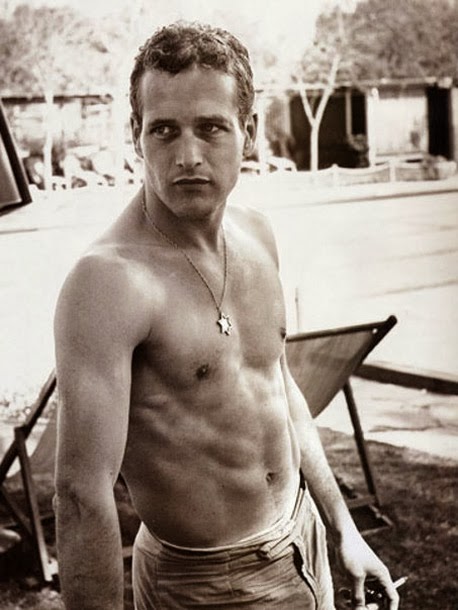 |
| Shiksa-bait (This isn't just gratuitous. He's in the movie version of "Exodus.") |
BLOODSISTERS takes place in Meiji-era Japan, which lasted from the late 19th century to the early 20th. Why set my novel then and there? I set it in Japan because my original idea for the story comes from a college friendship with someone who was half-Swiss and half-Japanese. We both loved the same dark fantasy books. We'd talk, at great length and in excruciating detail, about which paranormal creatures we loved, which ones we'd be if we could, and what it would be like to live forever. How would that affect our friendship? From there I got the idea for BLOODSISTERS. The original idea was to start the book with my two main characters, Atya, a Lithuanian witch, and Ochira, a Japanese vampire princess, meeting and traveling together. Eventually they'd end up back at Ochira's home in Japan, where Atya would shack up with Ochira's twin brother.
When I finally sat down to write BLOODSISTERS I realized the real story lay in what happened after the two women arrived in Japan. What would Atya's outsider status mean among a royal family of vampires? The Meiji-era in Japan is rich with possibilities for historical fantasy writers: Japan had only recently opened its shores to the West and was coming to terms with some fallout from that. This had an enormous impact on Japanese culture, society, and government. Therefore, it seemed a natural fit to set my novel about a foreigner coming to Japan during a historical period when Japan was dealing with this very issue.
Purely by coincidence, my work-in-progress THE HOLLOW QUEEN takes place during the same era. I've always been obsessed with my own ancestry and the stories of my family coming to America. Like so many other Ashkenazi American Jews, my family came here through Ellis Island. Our new apartment overlooks New York harbor with a view of the Statue of Liberty. The idea for a story that takes place on a ship bound for Ellis Island just sort of happened one day last summer. But what would happen on that ship? Ghost stories are always fun, and I'm fascinated by the idea of people being stuck in a crisis together. A ghost ship full of immigrants, who all come from different countries, speak different languages, and carry a multitude of traditions and beliefs with them, trapped on a ship mid-Atlantic, haunted by a ghost.
My imagination went into overdrive with this one, and I'm pleased to say that after starting work on the first draft of THE HOLLOW QUEEN less than a week ago I'm already 8,000 words in.
And then, of course, something like this happens:
 |
| Can you believe I took this with my iPhone? |
That's the view of New York harbor from my living room balcony this morning. You can't see the harbor, of course, because it's buried under all that fog. If this doesn't stir the imagination, I'm not sure what will.
What are your favorite sub-genres? Do you prefer your history straight-up, fictional, or magical?
Tuesday, September 3, 2013
Exercise for Writers
I like to exercise.
There, I said it.
In addition to all the usual reasons why it's important to get a good workout in every now and then -- heart health, quality of life, etc. -- I think there are three reasons why writers should get their sweat on. In no particular order:
Healthy Body = Healthy Mind
I don't do any kind of regular workout. That is, I don't do the same workout all the time. I exercise based on the class schedule at my nearby YMCA cross-referenced with the Duke of Juban's nap schedule: Mondays I do step aerobics; Wednesdays I do power yoga (like regular yoga, but with a lot of sweating and grunting and grimacing and swearing); Thursdays I pound away at an elliptical machine for 45 minutes; and Saturdays I go spinning with the hubby.
All the workouts I do are very cardio-intensive. I sweat a LOT. Like, buckets. Like, if I am not hoopy and forget my towel, I probably shouldn't do the class because I will leave a small pond of sweat on the floor. And with all that heart-pounding sweat comes some wonderful endorphins, endorphins which make me feel reallllllly good, y'all. So good that I am a better mother for them, and a better writer. I come home, put the little one down for his nap, shower, and then pound out an easy one thousand words. They aren't necessarily good words, but they come easy, and once they are there and written I can always go back and revise.
Writing is Solitary; Going to the Gym is (Kind of) Social
As I said, I go to my nearby YMCA, and I do three classes a week. The babysitting there is free, and the little one loves it. He gets to socialize with other toddlers (he's very popular because he brings the colorful Cheerios) and have some time of his own, while I go get my sweat on. My step and yoga classes are almost always full and I enjoy the comraderie that comes with the shared misery of pushing our physical limitations together. On Saturdays the husband and I put both kids into Child Watch and have a sort of modified date together, side by side on our spinning bikes.
But even outside the classes, I live in a very small community within a much larger neighborhood, which itself is part of the big bad city called New York. I know a lot of people who go to my gym, and often see them coming and going: one of the regulars in the step class is a women I've been on friendly speaking terms with for 4 years now because our sons both have the same name and used to go to Child Watch together. Another mom I'm friends with has spotted me in the cardio room while our older kids played together. On days when I feel like writing is so solitary, and so isolating, it's nice to have that bit of human interaction in the mornings.
What about you? How do you find a good mind/body balance as a writer or other creative type?
There, I said it.
In addition to all the usual reasons why it's important to get a good workout in every now and then -- heart health, quality of life, etc. -- I think there are three reasons why writers should get their sweat on. In no particular order:
Healthy Body = Healthy Mind
I don't do any kind of regular workout. That is, I don't do the same workout all the time. I exercise based on the class schedule at my nearby YMCA cross-referenced with the Duke of Juban's nap schedule: Mondays I do step aerobics; Wednesdays I do power yoga (like regular yoga, but with a lot of sweating and grunting and grimacing and swearing); Thursdays I pound away at an elliptical machine for 45 minutes; and Saturdays I go spinning with the hubby.
All the workouts I do are very cardio-intensive. I sweat a LOT. Like, buckets. Like, if I am not hoopy and forget my towel, I probably shouldn't do the class because I will leave a small pond of sweat on the floor. And with all that heart-pounding sweat comes some wonderful endorphins, endorphins which make me feel reallllllly good, y'all. So good that I am a better mother for them, and a better writer. I come home, put the little one down for his nap, shower, and then pound out an easy one thousand words. They aren't necessarily good words, but they come easy, and once they are there and written I can always go back and revise.
Our Brains Need Downtime
Writing is sedentary for my body, active for my brain. Working out is the opposite of writing. With all those classes I take, and the one day of strapping myself to a cardio machine, comes some serious downtime for my brain. Not watching TV and letting my brain go all mushy; not sleeping to recharge. But doing something active without really thinking about much more than "Sweat good! Keep going! Sweat good! Keep going!" When pop music is blasting in my ears, my heart is about to burst out of my chest, and my body feels like I-just-can't-anymore, it's hard to stress about things like character motivation or plot points. Unlike watching TV, where I shut my brain off for a while, during exercise I still have to think -- only I am extremely focused on the task at hand and on getting through jump squats/lizard pose/that elliptical hill/that spinning hill until I can breathe like a normal person again and grab some water. And I think my brain kind of likes that.
Writing is Solitary; Going to the Gym is (Kind of) Social
As I said, I go to my nearby YMCA, and I do three classes a week. The babysitting there is free, and the little one loves it. He gets to socialize with other toddlers (he's very popular because he brings the colorful Cheerios) and have some time of his own, while I go get my sweat on. My step and yoga classes are almost always full and I enjoy the comraderie that comes with the shared misery of pushing our physical limitations together. On Saturdays the husband and I put both kids into Child Watch and have a sort of modified date together, side by side on our spinning bikes.
But even outside the classes, I live in a very small community within a much larger neighborhood, which itself is part of the big bad city called New York. I know a lot of people who go to my gym, and often see them coming and going: one of the regulars in the step class is a women I've been on friendly speaking terms with for 4 years now because our sons both have the same name and used to go to Child Watch together. Another mom I'm friends with has spotted me in the cardio room while our older kids played together. On days when I feel like writing is so solitary, and so isolating, it's nice to have that bit of human interaction in the mornings.
What about you? How do you find a good mind/body balance as a writer or other creative type?
Thursday, August 15, 2013
Hail to the King
No, seriously, am I the last writer on earth to finally read Stephen King's "On Writing," aka "the writing bible" (as some call it)?
Like parenting manuals, I don't generally read books on how to write. Of course, sometimes I need help -- in either area. When it came time to potty train the Juban Princeling, I picked up "Stress-Free Potty Training," and when we learned he was going to be a big brother I got "Siblings Without Rivalry." I'm not a total Neanderthal, I just don't like wasting time reading books on things I already do everyday.
But sometimes even I have to admit that it's time to call in the Big Guns and see what The Pros have to say. To give you a clue where I am in my parenting life these days, I'm currently reading "Setting Limits With Your Strong-Willed Child." And in my writing life I'm just over halfway through "On Writing."
It started like this.
It took me three years to get to a draft of BLOODSISTERS I was truly happy with. With the first draft I just dove in and wrote it. Then I realized how much it sucked. Like, sucked hard, and with commitment, and on a level that made me embarrassed to show it to people. I know first drafts almost always suck, but from what I understand from other writers, first drafts should at least have a story, even if it needs to be reworked. The draft I had was not a damn thing like the story I saw in my mind. Not even a tiny bit. I didn't know what it was, but it certainly wasn't anything I recognized as the story I wanted to tell. I scrapped about 90% of my first draft, went back, and rewrote BLOODSISTERS until the story itself was something I could live with.

Going into BLOODSISTERS'S sequel, WANDERLUST, was daunting. I didn't want to have to scrap three months of hard work again. I didn't want to have to write the book twice, again. I psyched myself out so badly that after only a few thousand words I just sort of gave up. I took some time off to write a few short stories, revise BLOODSISTERS yet again, and then take a month off from writing entirely. (That last was not 100% voluntary: we moved apartments, and that sucked up a lot of my time.)
Meanwhile, I thought of a story for another book, one not related at all to THE PROPHESIES TRILOGY. The idea happened when the Juban Princeling misheard something his father or I said, and repeated back, "What's a hollow queen?" I decided to come up with an answer. The more I thought about it, the more I decided THE HOLLOW QUEEN would be a horror story. Not a short story this time, which is where my default spontaneous ideas go, but a novel. A historical novel. A ghost story.
Funny, how that little nugget of an idea then opened the creative floodgates. Shortly after figuring out (or "discovering," as King might put it) the setting for THE HOLLOW QUEEN (a passenger ship bringing immigrants to America in the late 1800s), I also discovered the real story for WANDERLUST. I came up with a five-point plot summary (sorry, King) so that I wouldn't get lost in my own story again and my first draft would, at the very least, turn into something I could actually revise and work with. I know the major beats for WANDERLUST; now I just have to let the story itself flow out of my fingers and onto the page. It's not an outline, it's not a plot: it's just beats, five of them. A compass, not a map.

With that, I decided it was time to pick up "On Writing" and finally, you know, read it. It's certainly motivating; look at me, up at 5:30 this morning to get stuff done. Reading other blogs, looking up new markets, anthologies and contests for my short stories, updating my blog, Twittering -- all the writing "work" that isn't actual writing. During the Duke of Juban's, daily 2-hour nap I like to focus on writing, including critiquing for my partners. In 2 hours I can write 1,000 words and critique two chapters for other people.
I'm happy to admit I'm not too proud to know when I need some guidance. If there are parenting professionals out there who can help me minimize my older kid's meltdowns, I'm happy to at least hear what they have to say. I don't need a perfect Stepford child, I just need more good days than bad ones. And if Stephen King himself has some advice on being a professional writer, then I think I need to sit up and pay attention. I don't need to be as successful as he is, I don't need to sell a gajillionty books like he has. I just need to write good stories I can be proud of.
Thursday, July 25, 2013
Crikey!
Crikey, it's been a long time since my last update!
I say "crikey" because of my current Anglophile phase. It started when I saw STAR TREK: INTO DARKNESS and said, "Who is that beautiful man playing super baddie Khan?" and went home to watch the entire first season of SHERLOCK by myself, and in doing so, gave my heart over to Benedict Cumberbatch.
It's continuing on with my completely bizarre and out-of-nowhere obsession with the Royal Baby. I left MSNBC on mute all day during Kate's labor, and I'm not entirely sure why. (My friend in London, Sir Brit, thinks its because Americans secretly want to be British subjects again. I laughed, but a disturbing amount of my friends seem to be OK with that idea.)
Anyway. England, and whatnot.
In the past few weeks we've moved a few blocks from our former home (or "flat") to a new one with gorgeous views of New York Harbor, my older son has finished with preschool and started summer camp, and my little one is finally in more daycare, which means after nearly a month of being forced away from my writing I am finally back. I'm not going to lie: it was hard, emotionally so, not getting to work on any of my short stories or novel for a month. Every day I felt like something was missing from my life, and the first day back when I opened my manuscript and jumped in was like a long, deep breath.
But I wasn't idle during that month. I still submitted my short stories to markets and queried agents. No rest for the writing!
The bad news is I've had no bites on either front yet, though every day I become more optimistic that my stories are that much closer to finding their homes and my manuscript is that much closer to finding its champion. The good news is that when I revise my novel now I really feel like I'm reading something I love. And isn't that the whole point of writing? To write the story you want to read?
Ah, the little one is eating Veggie Sticks off the floor. Must dash. Ta, then. Cheerio, loves.
I say "crikey" because of my current Anglophile phase. It started when I saw STAR TREK: INTO DARKNESS and said, "Who is that beautiful man playing super baddie Khan?" and went home to watch the entire first season of SHERLOCK by myself, and in doing so, gave my heart over to Benedict Cumberbatch.
 |
| Big Ben. Best name for a clock, ever. *giggle giggle* |
It's continuing on with my completely bizarre and out-of-nowhere obsession with the Royal Baby. I left MSNBC on mute all day during Kate's labor, and I'm not entirely sure why. (My friend in London, Sir Brit, thinks its because Americans secretly want to be British subjects again. I laughed, but a disturbing amount of my friends seem to be OK with that idea.)
Anyway. England, and whatnot.
In the past few weeks we've moved a few blocks from our former home (or "flat") to a new one with gorgeous views of New York Harbor, my older son has finished with preschool and started summer camp, and my little one is finally in more daycare, which means after nearly a month of being forced away from my writing I am finally back. I'm not going to lie: it was hard, emotionally so, not getting to work on any of my short stories or novel for a month. Every day I felt like something was missing from my life, and the first day back when I opened my manuscript and jumped in was like a long, deep breath.
But I wasn't idle during that month. I still submitted my short stories to markets and queried agents. No rest for the writing!
The bad news is I've had no bites on either front yet, though every day I become more optimistic that my stories are that much closer to finding their homes and my manuscript is that much closer to finding its champion. The good news is that when I revise my novel now I really feel like I'm reading something I love. And isn't that the whole point of writing? To write the story you want to read?
Ah, the little one is eating Veggie Sticks off the floor. Must dash. Ta, then. Cheerio, loves.
Saturday, May 25, 2013
Productivity
Now, I love my kids, and I love being a stay-at-home mom so I can spend as much time with them during their formative years as I can.
But.
My husband took the kids to his mother's house in Florida this weekend, and I'd be lying if I said it's not affecting my creative productivity. I've rewritten about 80% of the first chapter of BLOODSISTERS, rewrote nearly my entire query letter, and am researching the hell out of every agent I want to query or re-query. And all this in just the first 36 hours they've been gone.
(I've also finally watched the first two episodes of "Sherlock," which my friend Michelle has been nagging me to watch for years. Since seeing "Into Darkness" last week I'm now a certified Cumberbitch.)
(Btw, "Star Trek: Into Darkness" is really, really good. Like, crazy good. Bananas good. I kind of want to go see it again while the fam's away. I want to live inside that movie.)
I miss my kids, I do, and I definitely miss my husband, but it's nice to finally sit down and have all this uninterrupted work time. Before he started preschool my older child, the 4 1/2-year old Juban Princeling, went to daycare twice a week, giving me 16 hours a week of "work" time. I look back now and can't believe how much of it I wasted. Since we're trying to save money, my younger child, the 14-month old Duke of Juban, only goes to daycare 5 hours a week, during which I have a regular weekly doctor appointment, pick the Princeling up from school, and then take him to his weekly doctor appointment. But this summer the Princeling will be in camp from 9-5 every day, and I've told my husband that I absolutely need the Duke in daycare at least 2 full days a week. Maybe some people can write with two small children around, but I can't. The Princeling is old enough to give me space when I ask for it, but he also talks non-stop (no idea where he gets that from...) and doesn't yet get that I can't chat with him and write at the same time. The Duke, meanwhile, is jealous as hell of my laptop and just plain won't let me do anything on it if he's awake.
I have three days left of no kids and no husband. With all I've gotten done already, imagine what more I can do in the next three days!
But.
My husband took the kids to his mother's house in Florida this weekend, and I'd be lying if I said it's not affecting my creative productivity. I've rewritten about 80% of the first chapter of BLOODSISTERS, rewrote nearly my entire query letter, and am researching the hell out of every agent I want to query or re-query. And all this in just the first 36 hours they've been gone.
(I've also finally watched the first two episodes of "Sherlock," which my friend Michelle has been nagging me to watch for years. Since seeing "Into Darkness" last week I'm now a certified Cumberbitch.)
(Btw, "Star Trek: Into Darkness" is really, really good. Like, crazy good. Bananas good. I kind of want to go see it again while the fam's away. I want to live inside that movie.)
 |
| My adorable little enemy of productivity |
I miss my kids, I do, and I definitely miss my husband, but it's nice to finally sit down and have all this uninterrupted work time. Before he started preschool my older child, the 4 1/2-year old Juban Princeling, went to daycare twice a week, giving me 16 hours a week of "work" time. I look back now and can't believe how much of it I wasted. Since we're trying to save money, my younger child, the 14-month old Duke of Juban, only goes to daycare 5 hours a week, during which I have a regular weekly doctor appointment, pick the Princeling up from school, and then take him to his weekly doctor appointment. But this summer the Princeling will be in camp from 9-5 every day, and I've told my husband that I absolutely need the Duke in daycare at least 2 full days a week. Maybe some people can write with two small children around, but I can't. The Princeling is old enough to give me space when I ask for it, but he also talks non-stop (no idea where he gets that from...) and doesn't yet get that I can't chat with him and write at the same time. The Duke, meanwhile, is jealous as hell of my laptop and just plain won't let me do anything on it if he's awake.
I have three days left of no kids and no husband. With all I've gotten done already, imagine what more I can do in the next three days!
Thursday, February 28, 2013
Holiday Magick Available for Pre-Order!
Buy one! Buy ten! Give them as gifts to all your friends!
"Holiday Magick" anthology on Barnes & Noble here.
"Holiday Magick at Amazon.com here.
Back copy:
"People don't usually question holiday traditions or their origins, but maybe they should. Over centuries, explanations of how and why holidays exist may have been lost or changed.
Some holiday histories might only be known by a few individuals. Ancient magic spells could have influenced how we celebrate today. Fairies, zombies, or demons may have shaped our holidays.
Consider the following...
Why do people give red roses and cards on Valentine's Day?
Is there more to the story of Purim than is traditionally told?
Why do people wear green on St. Patrick's Day?
What happens to spirits that are captured during the Japanese Doll Festival?
Where does Santa get his helpers?
You may think you know the truth, but you can't be too sure."
Available May 2013 from Spencer Hill Press

Wednesday, February 13, 2013
Other Writers
Writing doesn't happen in a vacuum.
Maybe some writers write alone; I have this romantic, and probably highly inaccurate, vision of Stephen King sitting all alone at an old-fashioned typewriter in a big room out in rural Maine, ala Jack Nicholson in "The Shining." Doesn't that just seem like how he writes?
A few weeks ago I banged out a short story called "Thank You For Your Service." Happy with the results I sent it off to one of my critique partners, Tony. He sent it back with his usual good advice, but totally missed the point of the story. That wasn't his fault, it was mine. Thank goodness for Tony, because now I know how to make the story much clearer and get my point across better.
Tony is still working on his website, but as soon as it's up and running I'll include the link here.
I'm currently critiquing my other partner's novel. Joy is a fantastic writer with a very clever story that's an inspired mix of fantasy and sci-fi.
I've been lucky enough to work with Joy and Tony for the past two years, and I can honestly and sincerely say that my writing has improved leaps and bounds because of them. Not just from their critiques and advice, but from reading their work. I am genuinely surprised Tony isn't a famous published author yet - he's that good. And Joy is sure to take the entire genre world by storm once she hits the ground with her query letters.
I only hope they can say the same about me.
Because of them I've been inspired to create a Writers Network page here on my blog. If you are a writer and would like to be added, please email me at the address on the left. We writers are lucky enough to live in an age where we can connect in a virtual world, help each other out, support one another, and goof around together when we procrastinate WHICH OF COURSE NEVER HAPPENS. Right?
Here's to us!
Wednesday, January 16, 2013
Tied to Word Count
The other day I complained about not getting enough words written for my second chapter. My husband, ever practical and always supportive, suggested I not tie myself to word count.
"Just write the story," he said.
Problem is, that's what I did with "Bloodsisters," and wound up spending two years rewriting the book almost from scratch, including six months of adding 10,000 words to beef up the word count to an acceptable length.
Now that I'm a veteran of writing one book, I think I might be more of a planner than a pantser. For "Wanderlust" I came up with the story first, including the minor characters and their backstories and subplots. I used a template to sketch out my beginning, middle, and ending so I don't get off track. And it's working! Now that I know exactly where I need to go - not just with the novel as a whole, but what path I need to take to get there - it's much easier to write with confidence.
But it also means I'm tied to the word count. The WC is how I know how much time to spend in each scene, each chapter, each of the three sections of the plot. Word count helps me pace myself, something I found nearly impossible with "Bloodsisters."
My goal is 5K words per week, and so far I'm doing that. It's not easy, especially with one less daycare day for the baby per week, and I get most of those 5K done on weekends, but a 5K/week word count goal means forcing myself to write through the blocks and keep going, even when I don't fully feel it. Five thousand words a week means my first draft will take six months instead of over a year.
So, word count. Writing by WC means forcing myself to stick to the plot and flesh out details now rather than filling them in later just to bump up my numbers. And that means a better story from the very first draft.
Saturday, January 5, 2013
My Writing "Holy Grail"
Since I discovered it in 2000, I've not only loved the magazine Fantasy & Science Fiction, but it's been a goal of mine to get published in it's lofty pages.
A tough goal, for sure, but one I think worth pursuing. It's my own personal Holy Grail. More than getting a novel published, more than getting published anywhere else, I simply must get into F&SF someday, even if that day is years and years from now.
Back in 2000 when I was young and fresh and didn't know much about the craft of writing and getting published -- I only knew that I loved writing stories -- I sent a lot of really bad work to F&SF. Really bad. I'm amazed I got any response at all, much less the kind, personalized rejections I received.
Then life happened and I stopped writing short stories for a while, and then I stopped working on my novel for a while.
Now I'm back, and I'm a little more seasoned. I've been in critique groups and have partners and mentors helping me with the mechanics of putting a quality story together through tight, thoughtful prose. (At least, I like to think so.)
So I keep going. Keep typing. Keep making stories happen, one word at a time.
It may take my entire lifetime, but I will get a story in that magazine. I owe it to a wide-eyed, naive young 20something writer, full of hope and pride and short on common sense, to see this done.
Monday, December 31, 2012
Happy New Year!
Instead of making New Year's resolutions this year, I am making intentions. I've chosen each aspect of my life -- writing, yoga, marriage, parenting, my emotional health, and my physical health -- and created an intention for making it better over the next 12 months.
I'm pretty good at keeping my New Year's resolutions. The secret is this: I try to be realistic. I don't want to be skinny; skinny is not me. It's never been me. Even as a teenager with the metabolism of a hummingbird, I've never been skinny. But, I can make the intention to get off my butt and exercise more, starting slowly and working my way up to a regular daily workout. And yoga: I'd love to be able to do a headstand but I doubt that's ever going to happen. What I can do is make the intention to do a fuller practice once a week rather than my daily 10-minute back stretches.
When it comes to writing I am also trying to be realistic in my intentions. It took me two years to write my first novel. That is unacceptable for my second novel. I'll never get anything accomplished if it always takes me two years to write 85,000 words. However, I can make the intention to create a more thorough outline first so I can be more efficient with the little writing time I have, especially now that we've cut out one of the baby's daycare days from our weekly budget.
Knowing my limits means not resolving to write three books this year. That's setting myself up for failure. Instead, my writing intention for 2013 is to finish a first draft of my second novel, finish a full first revision, and write two additional short stories. That, I think, is realistic enough to accomplish while also giving me something to truly work towards and challenge myself with.
Do any other writers make writing resolutions, or intentions?
Monday, December 17, 2012
Short and Sweet
Working on my first short story in quite a while. It feels like going back to my roots, but at the same time I'm so in the mindset of novel-writing that it's also tricky going back to short form. I have to keep reminding myself to stay on track and not get bogged down in too many details, or dialogue.
I've had this story in my head for a while, so I'm glad to finally get it down. Once it's ready I'll shop it around to the mags and online zines. It's horror, but horror in theme, not content. I don't believe in gross-out just for its own sake.
OK, enough stalling. Time to get to work!
I've had this story in my head for a while, so I'm glad to finally get it down. Once it's ready I'll shop it around to the mags and online zines. It's horror, but horror in theme, not content. I don't believe in gross-out just for its own sake.
OK, enough stalling. Time to get to work!
Sunday, December 9, 2012
A Little Sunshine, A Little Rain
*cough hack cough cough cough*
That's me with bronchitis.
Parents should not be allowed to get sick. It should be one of those laws of nature, like getting hungry if you don't eat, or getting sunburn if you stay out in the sun too long. Once you have kids you should be immune from getting sick. Because what do doctors tell you when you're sick? Get some rest. And what's the one thing parents are involuntarily incapable of, ever? Resting. My rock star husband is doing his best to pick up the slack for me, but even he can't keep up with an bored, active 4-year old and a curious, crawling 9-month old.
*cough cough COUGH*
It feels like my lungs are trying to force their way out of my body via my head.
At least right now he's taken the older one to the YMCA nearby for some indoor basketball, and the baby's sleeping, so I can "rest" -- read: "get some writing work done." Thankfully, the physicality of writing requires little more than parking myself on the couch.
First up: I got my first request for a partial from an agent, yay! I sent it off this morning, so wish me luck!
Second: I've had this idea for a horror short story for a while now. It's been years since I've written straight-up horror, and I kind of miss it. This could be a good exercise for me before I dive into the second book in my "Prophesies" trilogy.
But before I write another word I think the codeine is kicking in. Time for a nap.
*cough cough zzzz.....*
Subscribe to:
Posts (Atom)